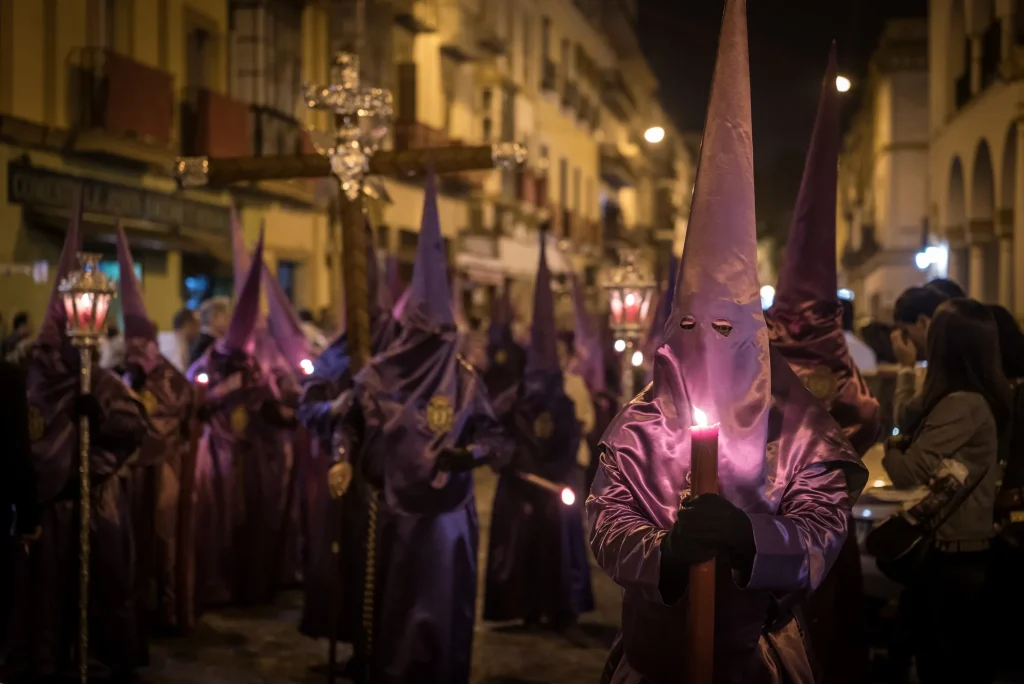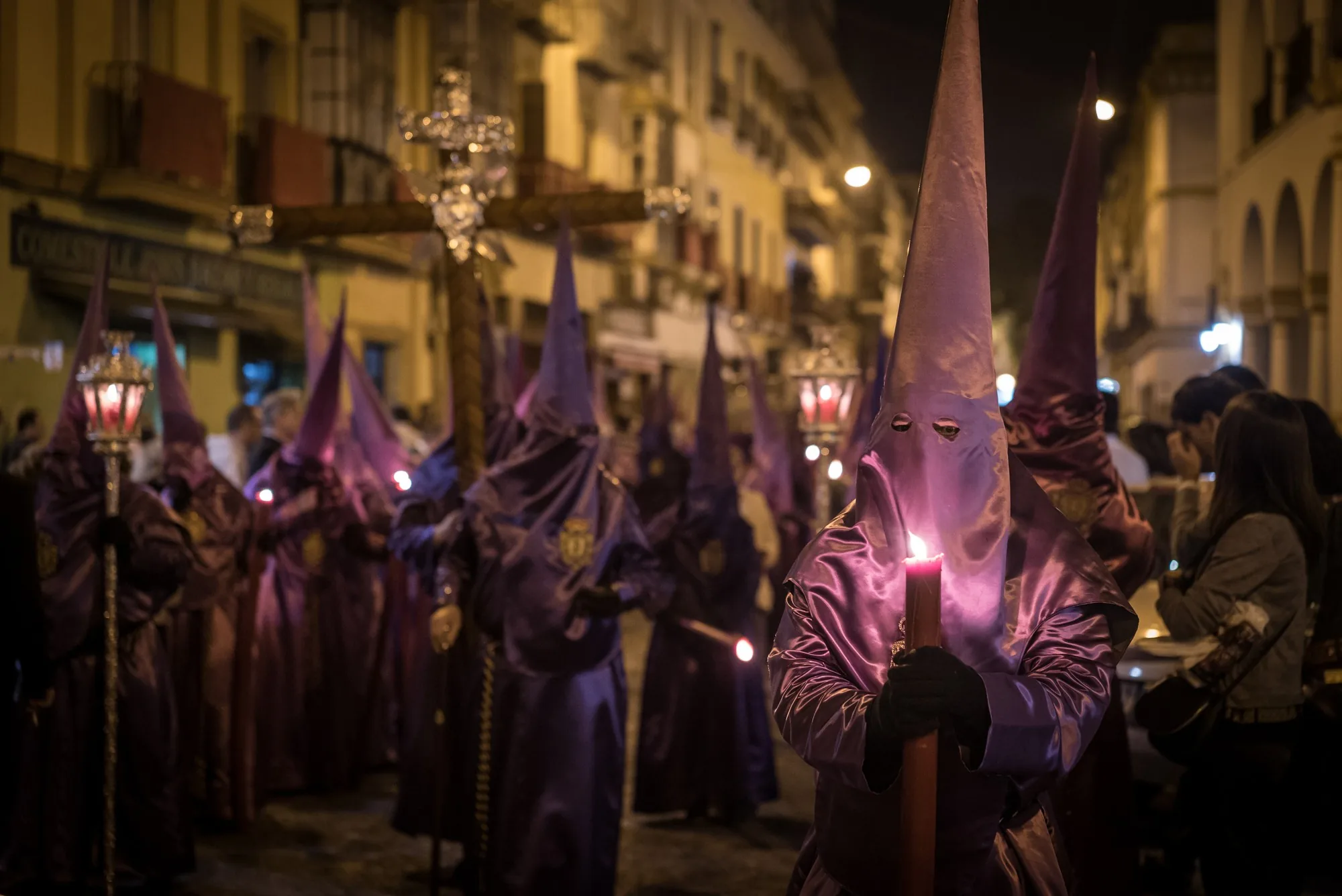
In northwestern Spain, few celebrations match the intensity of Holy Week in León. Recognised as an event of International Tourist Interest, it transforms the city’s streets into a powerful expression of faith, tradition and local identity. Recognised as an event of International Tourist Interest, it transforms the city’s streets into a powerful expression of faith, tradition and local identity.
The World of the Papones
To understand Holy Week in León, you first need to understand the figure of the papón. This uniquely Leonese term refers to the members of the city’s brotherhoods and confraternities, whose presence defines these days of devotion and tradition. For many local families, being a papón is something passed down from one generation to the next. It is not unusual to see very young children taking part alongside their parents and grandparents, helping keep alive traditions that in some cases date back to the 16th century. Being a papón means far more than simply joining a procession. It involves months of preparation, from caring for the floats to rehearsing with marching bands and preserving a heritage that remains central to the city’s cultural life.
The Procession of the Steps on Good Friday
Although each day of Holy Week has its own character, Good Friday morning is one of the most important moments in León. The Procession of the Steps is among the city’s most emblematic events and features a long route through the historic centre with major sculptural groups carried in procession. One of the most anticipated moments is El Encuentro in Plaza Mayor. There, in front of thousands of spectators, the figures of Saint John and the Virgin of Solitude symbolically greet Christ in a moving scene that is especially meaningful for both locals and visitors. The men who carry the heavy floats move with remarkable coordination and endurance. Their effort, discipline and precision are an essential part of what makes Holy Week in León so memorable.
A Different Tradition: The Burial of Genarín
León also has a singular tradition that sets it apart from any other city in Spain: the Burial of Genarín. Held on the night of Maundy Thursday, this popular procession commemorates Genaro Blanco, a local man who died in 1929, and over time it has become one of León’s most distinctive cultural events. What began as a satirical tribute by four friends evolved into a well-known local tradition. Today, participants gather to recite verses, share drinks and leave offerings of bread, cheese, oranges and laurel by the city walls, creating a striking contrast with the solemnity of the religious processions.
The Flavour of Holy Week: Leonese Limonada
Food and drink are also part of the Holy Week experience in León. One of the city’s best-known seasonal traditions is Leonese limonada, a drink typically made with red wine, lemons, oranges, sugar and cinnamon, then left to macerate for several days. It is usually enjoyed with tapas and shared with friends and family in the bars of the old town, especially in the Barrio Húmedo. For many people, having a glass of limonada is as much a part of Holy Week in León as watching the processions themselves. Experiencing Holy Week in León means stepping into a city shaped by incense, drums, silence and centuries of tradition. Whether your interest is religious, artistic or cultural, these days offer a powerful and unforgettable atmosphere in the heart of the city.
Don’t miss out. The passion with which the people of León live these days is contagious and leaves a deep mark on the traveler’s soul. At Apartamentos Meile, we understand that moments like these deserve a special setting. That is why we offer the perfect place to stay, so you can experience Holy Week in León with comfort, elegance and an unbeatable central location. Don’t just hear about it—come to León and discover why this celebration is the strongest heartbeat of our city.